Deploy high-durability hardware, safety-compliant architectures, and dynamic power distribution networks across municipal, industrial, and commercial operations.
As governments globally mandate transition deadlines for commercial vehicle fleets, logistics hubs, transit systems, and enterprise operations require more than off-the-shelf components. The convergence of grid integration, local communication standards, and hardware reliability necessitates deeply integrated Custom OEM EV Fleet Management solutions. Our manufacturing framework bridges the gap between hardware engineering and custom firmware architecture to build future-proof EV ecosystems.
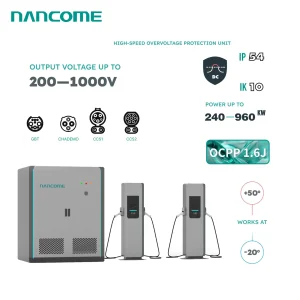
We tailor the electronics and outer aesthetics to client branding. This includes structural integration of heavy industrial components, liquid-cooling structures, and specific cable layouts designed for extreme weather environments (IP65, IK10 protection ratings).
We program communication modules to implement OCPP 1.6J/2.0.1 protocols directly. This allows fleet software tools to interface with native EVSE controllers, enabling dynamic load-shedding and smart-scheduling without external boxes.
Integrated hardware models support bidirectional Vehicle-to-Grid (V2G) power flows (ISO 15118 compliance). Hardware architectures support active load balancing and solar inverter integrations, keeping microgrids highly functional.
Procuring fleet hardware across international logistics pipelines requires careful consideration of local grid profiles, safety standardizations, and import-export efficiencies. We align our manufacturing schedules with custom logistics configurations to deliver plug-and-play charging modules to enterprise operations worldwide.
We specialize in manufacturing heavy-duty grid-tied energy units alongside compact, high-efficiency commercial chargers. Our production lines utilize automated SMT placement, automated circuit testing, and high-precision aging chambers to verify every system's durability before shipment.
Our logistical configurations allow containers to arrive fully pre-assembled, cutting down-time and minimizing local field engineering expenses during deployment.
Hangzhou EnerNova Charger Co., Ltd. is a leading innovator in the field of electric vehicle charging and smart energy solutions. Specializing in both AC and DC EV charging technologies, the company provides a comprehensive range of products and services designed to meet the diverse needs of residential, commercial, and fleet customers.
EnerNova’s portfolio includes home EV chargers, fast DC charging stations, intelligent charging power management systems, and advanced energy storage solutions. By integrating cutting-edge hardware with smart software, the company ensures optimized charging efficiency, real-time monitoring, and reliable energy management for all applications.
Committed to sustainability and the development of green transportation, Hangzhou EnerNova emphasizes seamless integration of renewable energy sources with its charging and storage systems. Its solutions support vehicle-to-grid (V2G) applications, load balancing, and intelligent energy optimization, helping customers reduce operational costs while enhancing grid stability.
With rigorous quality standards, continuous R&D investment, and a customer-centric approach, EnerNova has established itself as a trusted partner in the EV and smart energy industry. The company’s innovative technologies empower users to adopt cleaner, smarter, and more efficient energy solutions, paving the way for the future of intelligent mobility.


The concentration of raw material extraction, lithium processing, chip layout design, and structural manufacturing in China delivers clear efficiency advantages. Working directly with Chinese OEM/ODM factories allows companies to bypass middlemen, accelerate development, and scale production seamlessly.
From the foundational A-grade LiFePO4 cells to high-performance PCBAs and power controllers, we source critical elements close to our assembly facilities to keep production schedules predictable.
Our engineering teams can quickly refine structural designs, manufacture functional hardware prototypes, and run firmware loops within short timelines to accelerate product rollouts.
We perform exhaustive stress testing on our units, including high-voltage insulation tests, salt-spray exposure runs, and thermal cycle testing, verifying stability in harsh climates.
Adapting systems to local electrical standards, regional communication grids, and safety regulations is essential for successful global deployments. Our OEM solutions are designed to align with regional requirements, ensuring smooth installation and operation.
We configure electrical layouts for diverse grid configurations, providing UL-compliant split-phase wiring systems (120V/240V) for North American fleets, and CE-compliant three-phase setups (380V/415V) for European markets. Our systems support local utility requirements like smart metering, emergency shutoffs, and dynamic line control.
To support smooth local operations, our firmware integrates seamlessly with major third-party charge point management systems (CPMS) using open API pipelines. We offer localization features including multi-language UI support, customized payment terminals (NFC/RFID), and regional RFID card profile integrations.
From dense urban areas to heavy industrial operations, fleet layouts vary significantly. Our custom OEM EV hardware supports diverse charging topologies, load profiles, and site layouts.
Automated charging systems optimize vehicle turnaround times. Using dynamic load sharing, depots can charge delivery fleets overnight without overloading the local utility transformer.
Heavy-duty charging networks provide high-power DC charging to public transit systems. Integrated battery storage systems capture solar power during the day and discharge during peak evening charging cycles.
Charging infrastructure supports mixed electric fleets of forklifts, passenger shuttle vehicles, and heavy-duty logistics trucks. Custom software interfaces track charging logs for corporate sustainability reporting.
The EV ecosystem is rapidly evolving. Staying competitive requires integrating forward-looking technologies to improve infrastructure efficiency and utility compatibility.
Using the ISO 15118 protocol, fleet vehicles can act as mobile energy storage systems. Depots can feed power back to the grid during peak pricing windows, creating a potential new revenue stream while supporting local grid stability.
Modern management platforms analyze real-time grid capacity, vehicle state-of-charge (SoC), and next-day route schedules. This data optimizes charging speeds across all connected vehicles, avoiding peak demand surcharges.
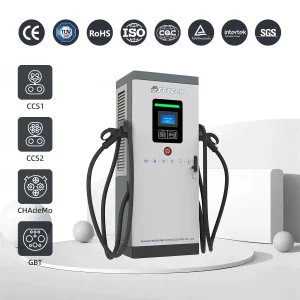
To reduce turnaround times for heavy-duty electric trucks and buses, next-generation charging infrastructure supports high-power liquid-cooled DC outputs, enabling rapid charging for large-capacity battery packs.
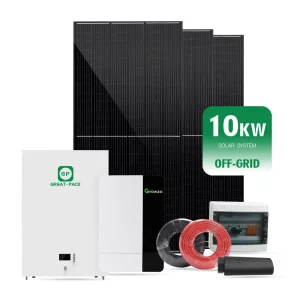
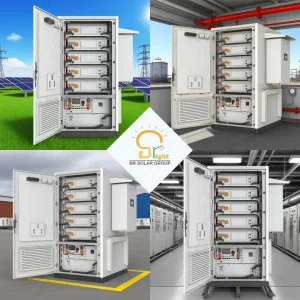
Deploying hybrid systems that connect solar arrays, onsite battery storage, and EV charging stations ensures continuous depot operation during grid outages while reducing dependence on external power sources.
Detailed answers to common technical, manufacturing, and regulatory questions from enterprise operators and distributors.
Our factory supports extensive OEM/ODM customization, including enclosure design (color, branding, and shape), custom connector configurations (CCS1, CCS2, NACS, GBT), custom PCB assembly layouts, and localized communication modules. Additionally, we customize firmware to integrate with specific charge point management software via OCPP, ensuring seamless interoperability.
We manufacture products under strict international safety and certification standards. For the North American market, our hardware complies with UL and FCC requirements, supporting split-phase grids. For Europe and other regions, our systems are certified under CE/TUV, supporting standard three-phase configurations. We also implement local utility requirements like power curtailment signals and reactive power support.
Yes. Our commercial EV charging systems are designed to integrate with battery energy storage systems (BESS) and solar PV networks. Using intelligent energy management software, the hardware coordinates with the storage unit to buffer peak demands, balance local grid loads, and utilize renewable energy efficiently.
Our hardware supports OCPP 1.6J and OCPP 2.0.1 via WebSocket. Communication channels include Ethernet, Wi-Fi, and 4G/5G cellular modules. For vehicle-to-charger communication, we implement ISO 15118 to support advanced features like Plug & Charge and Vehicle-to-Grid (V2G).
Our dynamic load management system monitors real-time building electrical demand and allocates the remaining capacity among active chargers. When overall demand rises, the chargers adjust their output down; when load decreases, charging speeds increase. This optimization avoids exceeding grid capacity and prevents costly demand charges.
Typical lead times for standard hardware configurations range from 4 to 6 weeks. For custom OEM orders requiring structural adjustments or localized firmware changes, lead times usually run from 8 to 12 weeks, depending on component availability and the complexity of the design.
Our quality control processes include automated optical inspection (AOI) for circuit boards, functional testing under high-load conditions, environmental simulation testing in specialized chambers, and continuous burn-in/aging runs. These measures ensure every unit meets the durability standards required for long-term commercial deployments.
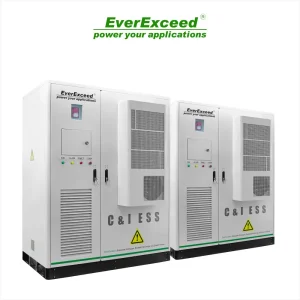
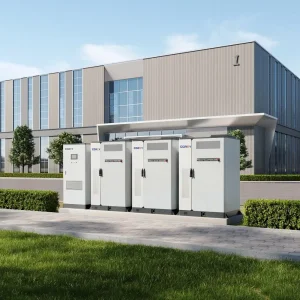
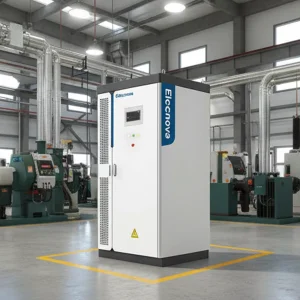
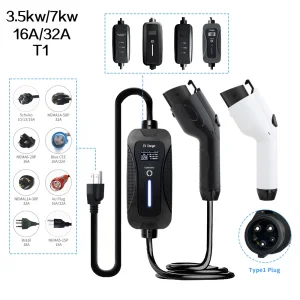
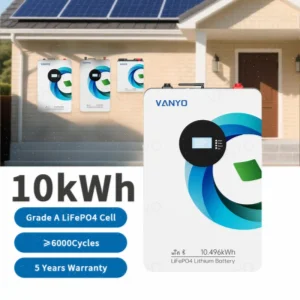
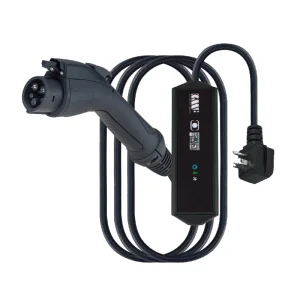
Complete your infrastructure deployment with high-capacity backup batteries, industrial megawatt units, and portable smart chargers.
 EnerNova Charger