Explore our core certified products configured for megawatt infrastructure, municipal grids, and custom enterprise deployments.
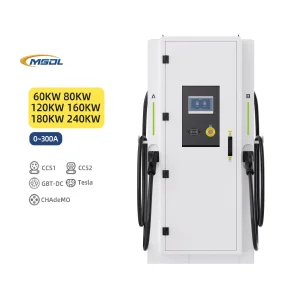
Hangzhou EnerNova Charger Co., Ltd. is a leading innovator in the field of electric vehicle charging and smart energy solutions. Specializing in both AC and DC EV charging technologies, the company provides a comprehensive range of products and services designed to meet the diverse needs of residential, commercial, and fleet customers.
EnerNova’s portfolio includes home EV chargers, fast DC charging stations, intelligent charging power management systems, and advanced energy storage solutions. By integrating cutting-edge hardware with smart software, the company ensures optimized charging efficiency, real-time monitoring, and reliable energy management for all applications.
Committed to sustainability and the development of green transportation, Hangzhou EnerNova emphasizes seamless integration of renewable energy sources with its charging and storage systems. Its solutions support vehicle-to-grid (V2G) applications, load balancing, and intelligent energy optimization, helping customers reduce operational costs while enhancing grid stability.
With rigorous quality standards, continuous R&D investment, and a customer-centric approach, EnerNova has established itself as a trusted partner in the EV and smart energy industry. The company’s innovative technologies empower users to adopt cleaner, smarter, and more efficient energy solutions, paving the way for the future of intelligent mobility.


Decentralized Power Infrastructure, Dynamic Routing, and AI-Driven Charging Architectures
Integrating liquid-cooling technologies to handle the high heat fluxes generated during multi-megawatt transfers. Critical for rapid heavy-duty fleet turnaround cycles.
Implementation of ISO 15118-20, allowing electric fleets to act as distributed energy storage assets, returning power to local microgrids during peak utility tariffs.
Utilizing high-density LFP storage modules adjacent to chargers to bypass transformer limitations, reducing demand charges and smoothing grid load.
The architecture of global energy transport is moving from centralized grid layouts to highly dynamic, decentralized networks. On-Demand EV Charging Services represent a paradigm shift, resolving localized peak power constraints by bringing capacity directly to where the vehicles sit. Our tech roadmap integrates vehicle telematics, real-time demand monitoring, and autonomous localized battery storage to reduce Level 3 charging pressure on distribution feeders.
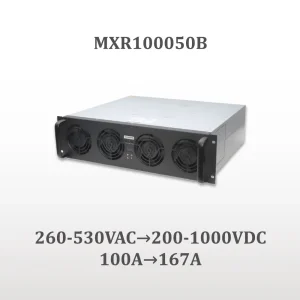
In parallel, high-frequency, wide-bandgap semiconductors (primarily Silicon Carbide, or SiC MOSFETs) are driving power conversion efficiencies past 97.5%. By reducing thermal dissipation requirements, we produce compact charging units like the Maxwell CE Approved 50kw EV Charger Module, achieving higher power density per cubic meter and lower overall Lifecycle Operating Cost (LCOS).
Decarbonizing heavy fleets, streamlining public transit networks, and scaling energy storage.
Logistics operators suffer severe efficiency losses if EV trucks must wait for fixed charging bays. By deploying modular, liquid-cooled high-capacity systems integrated with energy storage solutions, depots can dynamically distribute charge across multiple vehicles depending on their route dispatch schedules.
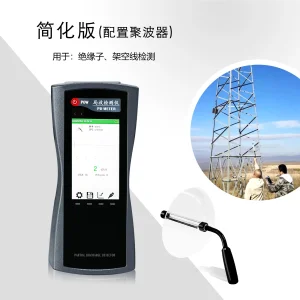
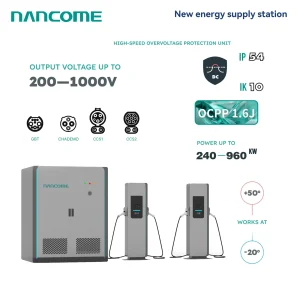
Using the Nancome Megawatt Liquid Cooled Charging Network, port terminals can reduce container ship turnaround times and service harbor drayage trucks. Supported by high-precision partial discharge analyzers to detect switchgear degradation before critical failures occur, reliability is maintained at 99.8%.
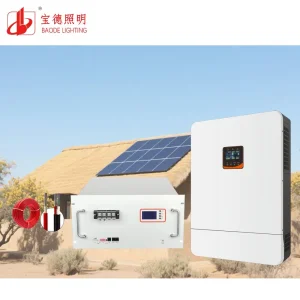
By matching residential solar storage and commercial BESS systems (such as the Advanced 215kwh Commercial Energy Storage Solution) with AC and DC charging stations, sites operate off-grid or semi-autonomously. Peak solar generation is stored in Lithium-Ion cells and delivered directly to vehicle fleets at night.
Public transit authorities require predictable maintenance cycles, long lifespans, and low total cost of ownership (TCO). High-power pantograph configurations and multi-standard charging pillars ensure rapid bus turnaround times at central hubs.
Navigating complex global standards with certified hardware platforms.
Full alignment with Low Voltage Directive (2014/35/EU) and Electromagnetic Compatibility Directive (2014/30/EU). Every component, from internal busbars to the external enclosure, passes rigorous laboratory emissions and safety testing.
Enabling Plug & Charge technology, standardizing secure communication between the EV and the charger. This streamlines payment verification and security handshakes without manual operator intervention.
Engineered for global environmental variance, from -30°C to +55°C. Enclosures are sealed to IP54/IP55 to prevent dust, humidity, and water ingress in coastal or desert deployment areas.
Deploying non-certified charging devices presents immense commercial and legal liability risk. Our CE-certified portfolios guarantee compliance with local European and international safety codes. This covers leakage protection (Type B RCD), over-temperature monitoring, and real-time short-circuit isolation, reducing risk profiles for infrastructure operators, insurance underwriters, and municipal partners.
Unlocking production efficiency, scale economy, and component-level tracking
At the heart of our market competitiveness is our Factory 4.0 infrastructure based in China's advanced manufacturing hubs. By integrating automated robotic assembly lines, high-precision Optical Inspection (AOI), and centralized ERP tracking, we manage supply-chain logistics from raw copper and silicon wafers to finished, containerized charging stations.
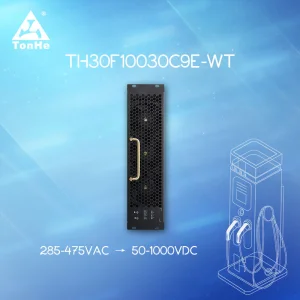
Vertical integration is key. We do not simply assemble parts; we engineer and manufacture proprietary EV charging modules (such as the *Tonhe 9th Gen 30kw Module* and *Maxwell 50kw Module*) in-house. This direct oversight minimizes sub-component delays, guarantees consistent thermal thresholds, and insulates our international buyers from market component price volatility.
| Metric | Standard Supplier | Our Factory 4.0 |
|---|---|---|
| Lead Time (Bulk Order) | 12 - 16 Weeks | 6 - 8 Weeks |
| Component Tracking | Batch Level | Serial Level (MES) |
| Burn-in Factory Testing | 24 Hours | 72 Hours Full Load |
Customized OEM/ODM services, modular hardware engineering, and global logistics capability.
From corporate enclosure color palettes and customized logo branding to proprietary firmware integrations, we offer custom-tailored charging products that integrate seamlessly into your brand identity.
Integrate charger management platforms with local utility load-balancing APIs. Direct connection enables smart dynamic power throttling, load profiling, and customer billing models.
Minimize downtime with hot-swappable modular internal bays. If a component experiences issues, regional service partners can swap the module out in minutes, bypassing lengthy site repairs.
Deep engineering insights and answers to major global procurement inquiries
CE certification ensures strict adherence to essential European safety, health, and environmental protection standards. It ensures that chargers satisfy electromagnetic interference (EMC) regulations, limiting emissions and avoiding disruptions to nearby telecommunications infrastructure and microelectronics.
Dynamic Load Balancing (DLB) continuously reads total system current consumption at the facility entry point. If usage spikes, the chargers dynamically scale down their draw to keep the overall demand below utility limits, avoiding high penalty tariffs or overload failures.
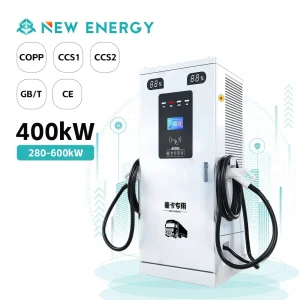
Liquid-cooled stations route a safe dielectric coolant liquid through the charging cables and connector contacts. This dissipates thermal energy rapidly, allowing cables to remain thin, light, and flexible while handling currents from 500A to 600A continuously. This supports up to 600kW+ charging power per connector.
Our hardware fully supports the Open Charge Point Protocol (OCPP) versions 1.6J and 2.0.1. This permits secure communication with central networks via WebSockets over cellular (4G/LTE), Wi-Fi, or Ethernet, facilitating payment processing and diagnostics.
Yes, our stations are designed and tested to meet IP54/IP55 ingress standards. Components are treated with anti-corrosion coatings to protect against salt mist and high humidity, and internal heaters ensure operations down to -30°C.
On-demand chargers often utilize localized energy storage buffers. These battery buffers charge slowly from standard utility connections during low-tariff hours and discharge rapidly to vehicles during peak demand. This design delivers high power locally without overloading the main distribution grid.
High-capacity commercial storage and versatile, portable power delivery systems.
 EnerNova Charger